
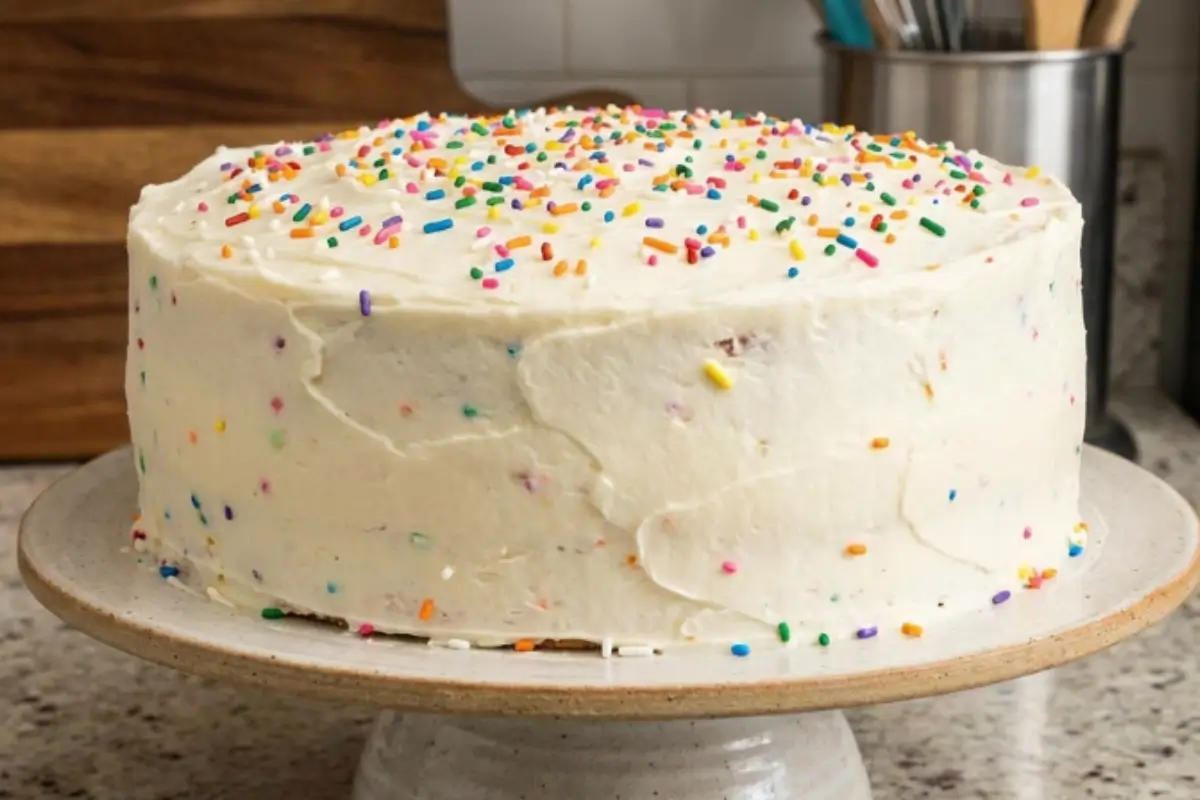
When you are searching for the best cake storage tips, it usually happens in the quiet of the night. I know the feeling perfectly. You are standing in a softly lit kitchen, the warm smell of vanilla and freshly grated lemon zest still lingering in the air.
Staring at a beautifully decorated milestone cake you just spent hours pouring your heart into. And then, a sudden wave of panic hits. Will it dry out by tomorrow? Am I going to serve dense, stale cake to my loved ones?
I hear from so many home bakers who tell me they are terrified of ruining their hard work, confessing they are "scared my cake will taste like fridge" or sharing the horror story of accidentally serving a sweet treat that picked up savoury odours the dreaded "pickle cookies" effect.
Take a deep breath. Storing a cake correctly isn't about rigid, clinical perfection; it’s a cosy, tender way to protect the love baked into it. Growing up, my Nonna used to wrap her baked goods with the same gentleness as swaddling a baby.
She knew that protecting that soft, cloud-like crumb was just an extension of caring for our family.
You do not have to sacrifice a moist, melt-in-your-mouth texture for make-ahead convenience. Think of this guide as your accessible heritage wisdom, much like caring for a cherished loaf of fresh bread. I am going to give you absolute "baking insurance" so you can enjoy your gathering completely stress-free.
The Key Ingredients For Cake Storage And Why They Matter
I promise, this part is simpler than it looks; you probably have everything you need right in your kitchen drawers.
When we talk about preserving a bake, we have to treat our storage materials as our most important "ingredients". You don't need fancy, expensive equipment, but you do need the right tools to create a safe little cocoon for your dessert.
High-Quality Plastic Wrap & Aluminium Foil: These are mandatory ingredients for the undisputed gold standard of double-wrapping. The plastic seals in the moisture, while the satisfying crinkle of the foil acts as a shield against outside air.
A Note on Gluten-Free and Vegan Cakes: Because these beautiful cakes lack traditional gluten structure, they are highly susceptible to rapid staling. They require swift, airtight wrapping the moment they are cool to stay beautifully soft.
The Upside-Down Dome Hack: If you don't own a professional cake caddy, grab a deep plastic food storage container. Simply flip it upside down! Place your cake on the flat lid, and snap the deep container over the top like a protective dome. It is a foolproof, everyday tool for home bakers.
Here’s the trick I learned the hard way: I ruined a beautiful birthday sponge twice before I learned the double-wrap secret. Now, I never skip it.
See? You’re already doing beautifully.
The Golden Rule Step-by-Step Instructions
Take a breath; you’re doing great so far, and these simple steps will give you absolute peace of mind. Whether you are saving a slice for tomorrow's coffee or prepping for a massive Sunday gathering, this is the exact, foolproof method to protect your layers.
Step 1: Total and Complete Cooling:Types of Frosting Guide and Which One Is Right for Your Cake
Cakes must be 100% cool before wrapping. Trapping even a whisper of residual heat breeds condensation, which leads to a soggy crumb or, worse, mould.
You’ll know it’s right when the bottom centre of the cake pan feels completely cool to the touch against your palm.
Step 2: The Simple Frosting Guide
Before you store a frosted cake, you must know what kind of frosting you are working with.
Frosting-Type Storage Requirement: Why? American Buttercream: Shelf-stable (room temperature). High sugar content preserves the butter safely. Cream Cheese Frosting: Refrigeration is mandatory.
Dairy-based and highly perishable. Ganache (Water/Cream): Shelf-stable (usually 2 days). Sugar bonds with water to inhibit bacterial growth.
Step 3: The Q-Tip Hack for Frosted Cakes
How do you wrap a frosted cake without ruining the beautiful swirls? Cut the cotton ends off of clean cotton swabs (Q-tips) and insert the sticks vertically into the top of the cake.
Drape your plastic wrap over the sticks. They will hold the plastic suspended safely away from your delicate frosting. If it looks a little silly with sticks poking out, that’s completely normal!
Step 4: The Bread Slice Hack for Cut Cakes
Once a cake is sliced, the exposed crumb is vulnerable. Take a slice of plain white sandwich bread and pin it directly to the exposed cake crumb using toothpicks.
The cake will pull moisture from the bread, keeping your dessert tender and soft, while the bread sacrifices itself and turns hard.
This is where the magic starts to happen, and your cake is safely tucked away.
Why This Cake Storage Strategy Works
Here’s the part everyone overthinks but you won’t, because the science is actually quite comforting. Understanding what happens to your cake when you put it away can cure hosting anxiety. We want to keep that sweet, buttery aroma exactly where it belongs: inside the cake.
The Enemy of the Crumb (Starch Retrogradation): The most common heartbreak for home bakers is storing an unfrosted sponge cake in the fridge. Cold refrigerator temperatures cause the starch molecules in the flour to recrystallise.
This literally pushes the moisture out, turning a glorious sponge hard and dry. Unless a cake has a perishable dairy filling, the fridge is the enemy of a soulful, moist crumb.
The Anti-Fridge Smell Protocol: By double-wrapping (a tight layer of plastic followed by a snug layer of foil), you physically lock out ambient savoury odours. This banishes the fear of your delicate vanilla cake tasting like last night's leftover lasagne.
The Freezer Miracle: Pro-bakers agree universally: freezing actually locks in moisture. As long as the cake is securely double-wrapped to prevent freezer burn, the extreme cold pauses the staling process completely.
Most people miss this step, but keeping unfrosted layers out of the fridge makes all the difference in the world. You’re closer than you think to mastering this keep going.
Elena’s No-Fail Cake Storage Tips
Don't worry if you still have a few lingering questions; we all do when we want everything to be just right for our family.
Does the fridge really dry out my cake?
Yes, it truly does! Let's dispel the myth that the fridge keeps everything "fresher". Because of that starch retrogradation we talked about, the fridge will age your cake’s texture much faster than sitting at room temperature. Avoid the "fridge trap" whenever possible!
How far in advance can I bake and still get that fresh-baked taste?
I know the timeline anxiety of hosting a big dinner. You can safely bake your layers up to 3 days ahead of time! As long as they are wrapped securely and kept at room temperature (or frozen if you need more time), they will taste as though you just pulled them from the oven.
Does cream cheese frosting always need to be refrigerated?
Yes. Let's settle this debate with absolute food safety authority: cream cheese frosting strictly needs the chill of the fridge to stay safe. Because of the fresh dairy, it is not safe to leave it on the counter overnight.
How do I safely thaw a frozen cake without ruining the design?
The secret to thawing a frozen, decorated cake is to leave the wrapping on while it thaws on the counter. The condensation will form on the outside of the plastic wrap, rather than sweating directly onto your intricate frosting.
Just a few more details, and you’ll be a make-ahead master.
Saving a Little Joy for Tomorrow: Storage Tips, Freezing & Make-Ahead Notes
Whenever you feel stressed about an upcoming event, remember that your freezer is a baker's best friend.
This is what I do when I want to prepare for slow Sunday afternoons with the family without spending all morning in the kitchen. Freezing your unfrosted layers weeks in advance is a cherished secret of stress-free entertaining.
You can bake when you have a spare, joyful hour, wrap the layers tightly, and listen for the satisfying tap of a sealed container as you pop them in the freezer.
Save our make-ahead timeline to your phone for your next big family gathering.
Pulling a perfectly preserved, make-ahead cake from the freezer isn't just convenient; it is a heartwarming victory. It allows you to actually be present with your guests, rather than rushing around covered in flour.
(And if you love creamy textures that store beautifully, you’ll also love my ricotta-based desserts, which are perfectly suited for making ahead!)
You've got this, and tomorrow is going to be delicious.
Making Sweet Memories
If you are standing in the kitchen tonight, worrying over your cake, please take a deep breath and let it go. You have wrapped it tightly, you have followed the golden rules, and your cake is perfectly safe.
Remember, your upcoming milestone event is going to be beautiful, and your guests are going to be absolutely thrilled that you baked for them.
In my kitchen, baking is about joy, not perfection; we are making memories, not masterpieces. Your cake is safe, and so is your love. Now, go get some rest!
Is there a specific recipe cluster, like your cupcakes or cheesecakes, that you'd like to draft a matching "Elena" intro for next?
[…] Cake storage tips are the easy part; you've already done the hard work. […]