
A Keto Low-Carb Cheesecake Recipe should never mean giving something up it should mean finding a new way in. When I first started making cheesecake this way, I wasn't trying to reinvent Nonna's kitchen.
I was trying to hold onto it. My sister had just gone keto after her doctor's visit, and I wasn't about to let her sit at Sunday dinner with a plate of nothing while the rest of us dug into dessert.
So I stood at my counter with a bag of almond flour I'd never touched before, more nervous than I'd been in years, wondering if I was about to ruin something sacred.
I wasn't. And if you're standing where I stood, worried that "low carb" means less love, I promise you, it doesn't.
Why This Cheesecake Still Feels Like Home
Here's the thing about cheesecake: its soul was never in the sugar. It was always in the cream cheese, the slow bake, and the overnight chill that makes you wait, really wait, before that first bite.
Sugar was just along for the ride. So when I swapped it out, the heart of the recipe didn't change one bit. What changed was the method and that's exactly where most low-carb recipes online fall apart.
They swap the sweetener and call it a day, then wonder why the filling comes out gritty, or the crust burns before the middle sets. We're going to do this the right way, together, so you never have to wonder.
The Key Ingredients For Keto Cheesecake And Why They Matter
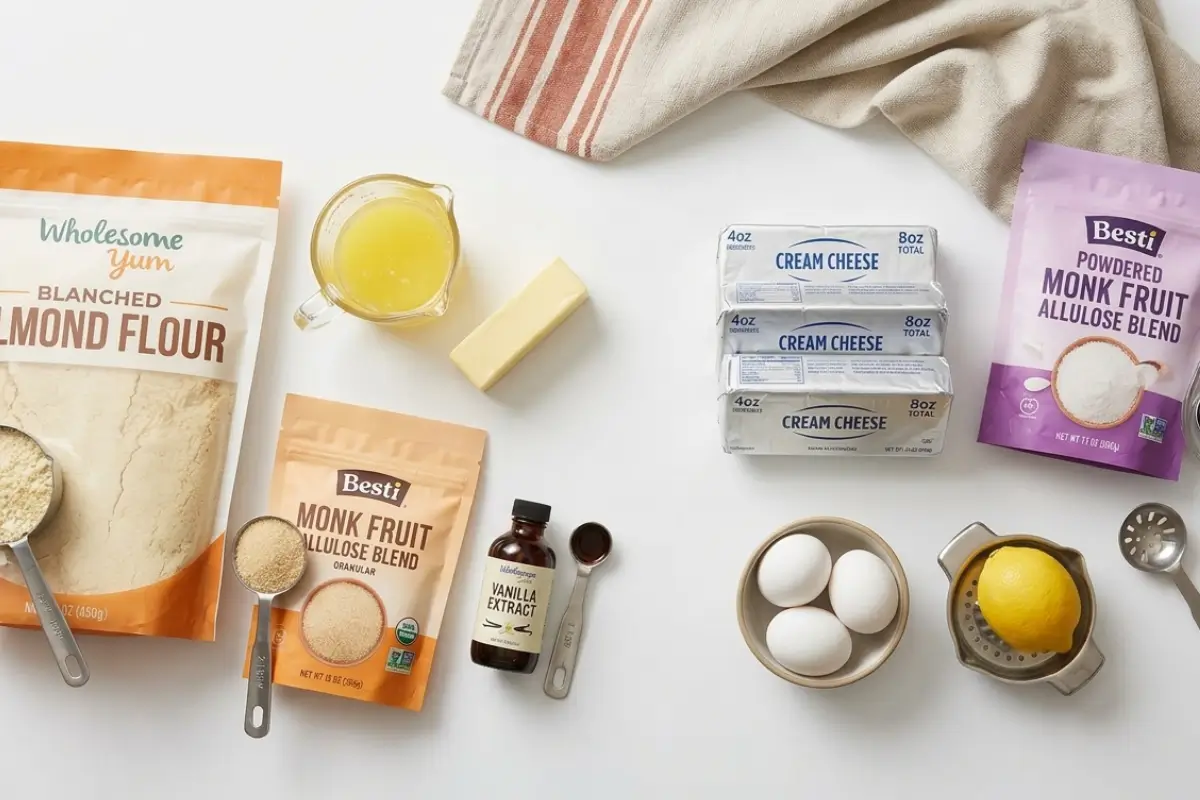
This part is simpler than it looks. I promise every ingredient here is doing a specific job, and once you know why, you'll never be nervous about a substitution again.
Full-fat cream cheese, softened all the way not just "not cold," but truly soft. Cold cream cheese is the number one reason low-carb cheesecakes come out lumpy. Set it out for a full hour, longer if your kitchen runs cool.
Almond flour (blanched, fine): this is your crust, and it behaves nothing like graham crackers. It toasts fast and burns faster, so we bake it gently and watch it closely.
Allulose, or a blend of allulose and erythritol: this is the one thing almost every other keto cheesecake recipe gets wrong, and it's worth pausing on. Pure erythritol recrystallizes as it cools, which is why so many keto cheesecakes turn gritty on day two.
Allulose doesn't recrystallize the same way, so blending the two (or using allulose alone) keeps your filling silky instead of sandy. This one swap solves the single most common complaint about keto cheesecake.
Full-fat sour cream: for tang and that soft, cloud-like set. Don't reach for low-fat here; it thins the texture and works against you.
Eggs, room temperature: they bind everything, but they're also the easiest place to overmix. Room-temperature eggs blend in gently, without whipping in extra air.
Fresh lemon juice and zest brighten the whole filling so it doesn't taste flat, which is a common complaint with sugar-free desserts.
Vanilla extract, pure imitation vanilla, has an aftertaste that becomes very noticeable once sugar is out of the picture.
A note for anyone baking dairy-free or nut-free: full-fat coconut cream and dairy-free cream cheese can stand in for the filling, and a sunflower-seed-flour crust works in place of almond flour just watch the bake time, as it browns a little faster.
The Golden Rule Step-by-Step Instructions
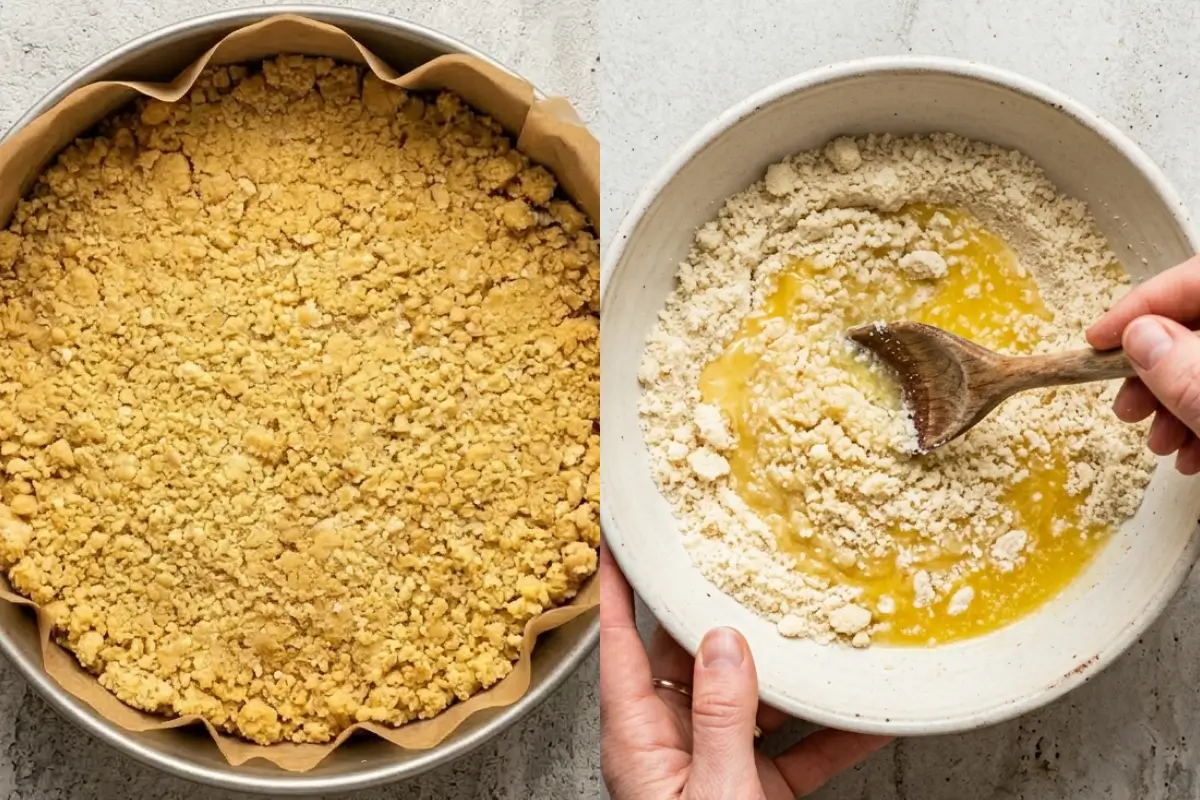
Take a breath. This is the part everyone overthinks, and you're about to see it's really just a handful of small, patient steps.
1. Build the crust with a light hand:
Mix melted butter, almond flour, a spoonful of sweetener, and a pinch of salt until it looks like wet sand. Press it into the bottom of your pan, not up the sides- just the bottom- so it doesn't scorch.
Bake at 325°F for 8–10 minutes, just until it smells faintly toasty and nutty. Pull it the moment you catch that scent; almond flour goes from golden to burnt in under a minute.
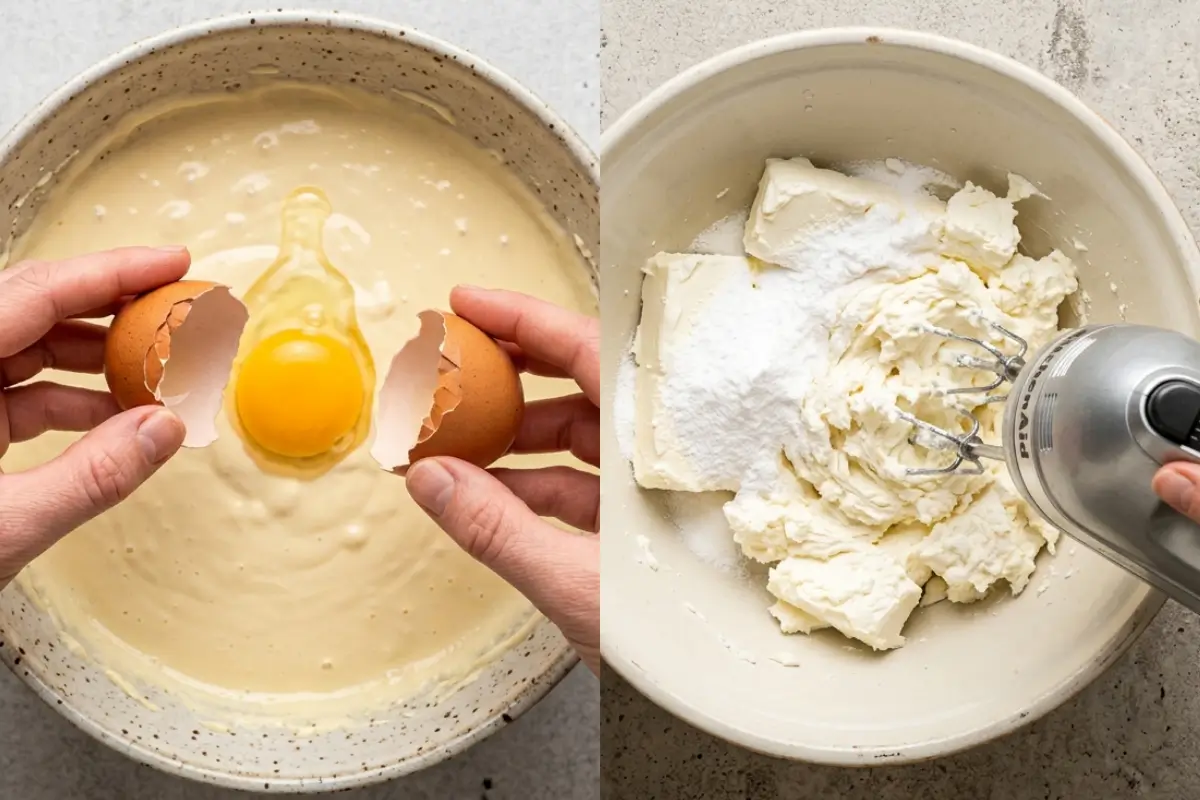
2. Beat the cream cheese alone first nothing else in the bowl:
This is the step most recipes skip, and it's the one that prevents lumps entirely. Beat softened cream cheese on its own until it's completely smooth, scraping the bowl twice, before anything else joins it.
3. Add sweetener, then sour cream, then vanilla and lemon on low speed, one at a time:
You're not trying to whip air in; you're trying to fold ingredients together. Keep the mixer on low the whole way through.
4. Add the eggs last, and barely mix them in:
Stir just until the yellow disappears. Overbeaten eggs are the number one cause of a cheesecake that cracks or puffs up like a soufflé and then collapses.
5. Bake low and slow, in a water bath, at 325°F:
Wrap your springform pan tightly in foil (or use a slow-cooker liner, which is leak-proof and far less fussy), and set it in a larger pan with about an inch of hot water. Bake for 55–65 minutes.
6. Trust the wobble test, not the clock:
A finished cheesecake should jiggle gently in the center like Jell-O, not soup, while the outer two inches look set. It will not look fully done in the oven, and that's exactly right.
7. Cool it slowly, in stages:
Turn the oven off, crack the door, and let the cheesecake sit inside for an hour. Then move it to the counter to finish cooling before refrigerating.
This slow goodbye is what prevents the surface cracks that low-carb cheesecakes are especially prone to, since sugar-free fillings have less structure to hold themselves together.
8. Chill for a full 6 hours, ideally overnight:
I know. This is the hardest part. But an underchilled keto cheesecake will taste soft and slightly loose instead of that dense, sliceable texture you're after.
See? You're already doing the hardest part beautifully; it's just waiting now.
Why This Keto Low-Carb Cheesecake Recipe Works
Here's the trick I learned the hard way, after two disappointing attempts of my own: keto cheesecake isn't a substitution recipe; it's a temperature-and-technique recipe.
Room-temperature everything prevents the lumps that make people think low-carb cream cheese "just doesn't blend right" it blends perfectly fine once it's warm enough.
The allulose-erythritol blend is the fix for the gritty, sandy texture that's the single most common complaint across low-carb baking communities this one insight solves it for good.
Low, slow baking with a water bath protects the delicate protein structure in a sugar-free filling, which sets up differently than a traditional one.
The wobble test replaces the old "clean toothpick" advice, which doesn't even apply to cheesecake. A cheesecake baked until a toothpick comes out clean is an overbaked, cracked cheesecake.
A slow, staged cooling process is non-negotiable here, because sugar-free fillings have less structural sugar to resist temperature shock.
This is where the magic actually happens, not in a fancy ingredient, but in patience.
Elena's No-Fail Tips
If yours looks a little different at any stage, that's completely normal. Here's exactly what to do about it.
Why does my keto cheesecake taste gritty?
This is almost always the sweetener. Pure erythritol recrystallizes as it chills, and that's the sandy texture you're noticing. Switch to allulose, or a half-and-half blend of the two, and the graininess disappears.
If you've already baked one and it's gritty, letting it sit at room temperature for 15–20 minutes before serving softens the crystals slightly and helps.
Why did my cheesecake crack down the middle?
Nine times out of ten, it's one of two things: the oven was too hot, or the cooling happened too fast. A quick test is to check your oven with a separate thermometer many run 15–25°F hotter than the dial says, which is brutal for a delicate keto filling. And always let it cool inside the turned-off oven before moving it anywhere.
Can I make this ahead of time?
Yes, and honestly, you should cheesecake is a better make-ahead dessert than a same-day one. It needs that overnight chill to set properly, so baking it a full day (or even two) before serving only helps the texture and flavor.
My filling seems too soft even after chilling what went wrong?
Look for this cue: it should hold a clean edge when you run a knife along the pan. If it's still loose after 6+ hours, the most common cause is underbaking.
The center should have looked like a soft wobble, not a liquid jiggle, when it came out of the oven. It always looks softer and warmer than it will once fully chilled, so don't panic before that final rest.
Can I use a different sweetener if I don't have allulose?
Monk fruit blended with erythritol works, though it can still recrystallize slightly. Straight erythritol will work in a pinch, but expect a touch more graininess that's simply how it behaves once chilled.
Saving a Little Joy for Tomorrow
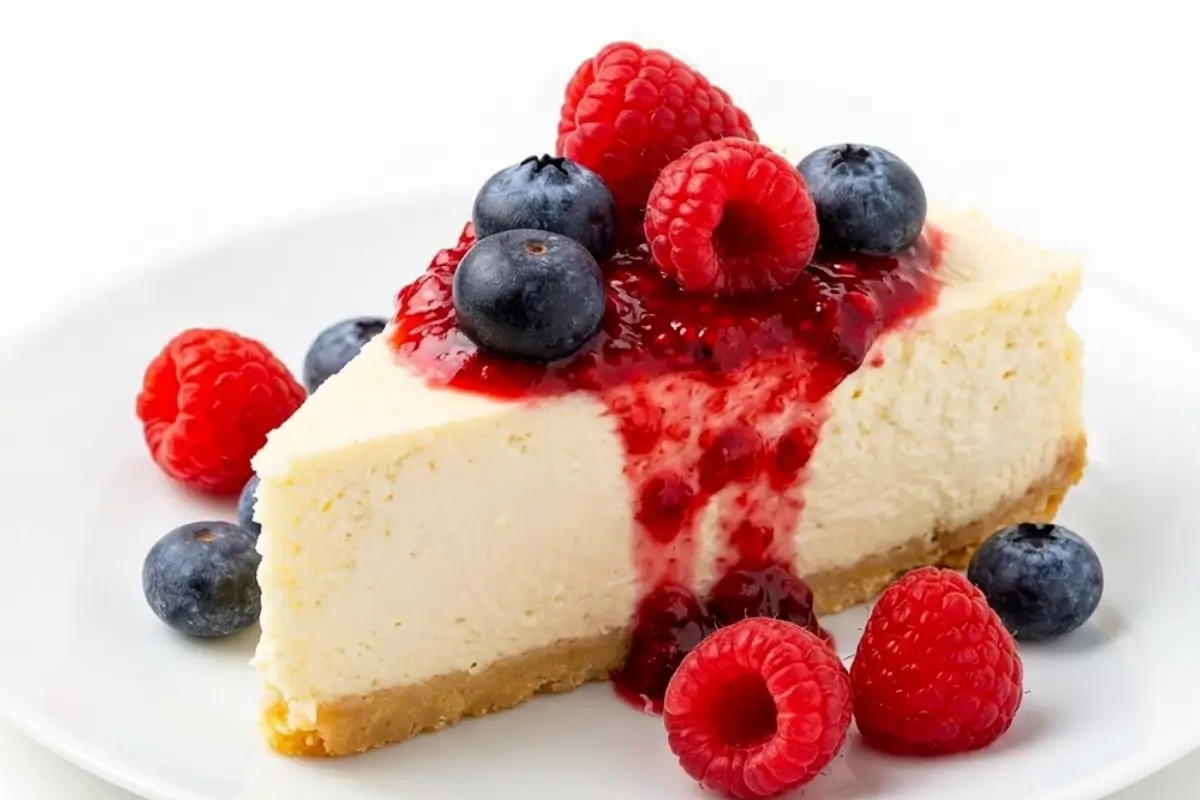
The Dreamiest Keto Low-Carb Cheesecake
Ingredients
Method
- Preheat the oven to 350 degrees F and line a 9-inch springform pan with parchment paper.
- To make the almond flour cheesecake crust, stir the almond flour, melted butter, sweetener, and vanilla extract in a medium bowl until well combined into a slightly crumbly dough.
- Press the dough into the bottom of the prepared pan and bake for about 10 to 12 minutes until barely golden, then let it cool for at least 10 minutes.
- Meanwhile, beat the cream cheese and powdered sweetener together at low to medium speed until fluffy.
- Beat in the eggs, one at a time.
- Beat in the lemon juice and vanilla extract.
- Pour the filling into the pan over the crust, smooth the top with a spatula, and tap the pan on the counter several times.
- Bake for about 40 to 55 minutes, until the center is almost set but still jiggly.
- Remove from the oven, run a knife around the edge if it is stuck to the pan, and cool on the counter to room temperature.
- Refrigerate for at least 4 hours or overnight until completely set before removing from the pan.
- Top your beautiful slice with fresh berries and a drizzle of berry sauce before serving.
Notes
This is the part that makes a keto cheesecake even more forgiving than a traditional one it holds beautifully.
Refrigerator: Covered tightly, it keeps for up to 5 days, and honestly tastes even better on day two once the flavors settle.
Freezer: Slice it first, then freeze the individual pieces on a tray before transferring them to a container. This way you can pull out exactly what you need, perfect for portion control on a low-carb plan. It keeps well for up to 2 months.
Thawing: Move a frozen slice to the refrigerator the night before you want it. Avoid the counter or the microwave both can turn that silky texture watery.
Make-ahead timing: Bake up to 2 days before serving for the cleanest slices and the fullest flavor.
You're closer to a perfect slice than you think.
Making Sweet Memories
I think about that first attempt often, standing at the counter, almond flour on my hands, terrified I was about to hand my sister a "consolation dessert" instead of the real thing.
What I learned instead is that cheesecake was never about the sugar. It was about the patience, the waiting, and the way everyone leans in a little when you finally slice it. That part never left, and it never has to.
So if you're baking this for someone who needs it to be low-carb, or simply because you want to know that you're not making a substitute. You're making the same cheesecake we've always made, just with a little more care in the details.
At AddCakes, we believe in memories, not masterpieces. Go make one.